-
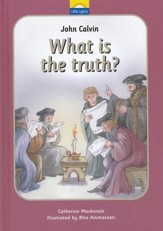 Catherine MackenzieChristian Focus / 2010 / HardcoverOur Price$7.515.0 out of 5 stars for John Calvin: What is the Truth?. View reviews of this product. 1 Reviews
Retail Price$7.99Save 6% ($0.48)Availability: In StockStock No: WW505608
The true story of John Calvin and the Reformation for young readers. When John Calvin was a young boy he was taught many things that weren’t true – but when he discovered the truth about God and Jesus Christ it was a very exciting time for him. It was so exciting he could not keep this amazing truth to himself. God helped John Calvin to teach the truth and he became one of the men who started the Reformation.
-
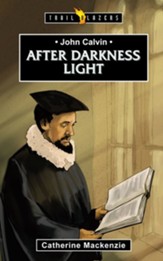 Catherine MacKenzieChristian Focus / 2014 / Trade PaperbackOur Price$7.72
Retail Price$9.99Save 23% ($2.27)Availability: Expected to ship on or about 11/14/26.Stock No: WW915509
The man who caused a stir.
Calvin had ideas on how we could live better lives – particularly how we could live in close harmony with God and each other – but because his ideas were radical, his life was filled with dramatic events and dangers. He was run out of town – and then welcomed back. He was accused of being too harsh – and also too tender hearted. When he explained what the bible meant he was considered too logical and too spiritual! He must have been an amazing man to have caused such a stir!
The Trailblazer series collects great stories from Christians of the past and delivers them to the young people of today. This gripping and astonishing story from Irene Howat will challenge young readers to seek truth like John Calvin did.
A well–known and long–standing series:
- Over 50 titles
- Great for ages 9 to 14
- Published in 14 languages
- Half a million books sold
- Also available in box sets when one book is not enough! 7 themed box sets, each with 5 books
Each biography follows the trailblazer’s journey to faith, and on to the work that God had planned for them. With lots of dialogue, these engaging stories show how God uses normal individuals to bring about his purpose.
Each book features:
- Thinking Further Topics for each chapter to help readers think about how what they’ve read applies to their life today
- Timeline of important events in the lifetime of each book’s subject
In this attractive volume, Simonetta Carr introduces young readers to the life, thought, and work of one of the most famous Reformers of the Christian church. She tells about the life of John Calvin from his birth to his death, placing him within the troubled context of the sixteenth century.
Carr also introduces Calvin’s writings in a way that children will desire to know more about his ministry and influence. Readers will come to know Calvin’s personality, his devotion to God and the church, and the personal challenges he faced. They will understand the struggles the early Reformed church faced at that time, not only surviving attacks of the Roman Catholic Church, but also achieving a clear identity and a unified doctrine. They will also have a glimpse of life in sixteenth-century Europe, stricken by pestilence, poverty, and wars. Simply written, and full of interesting facts, this book makes a great gift for children of this rich Reformed heritage.
-
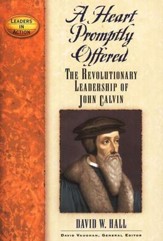 David W. HallCumberland House / 2006 / HardcoverOur Price$25.51
Retail Price$32.99Save 23% ($7.48)Availability: In StockStock No: WW825056
This introduction to the life, leadership, and thought of John Calvin presents the Geneva Reformer in his own words, unedited by the selective biases of hostile---and customarily uninformed---critics. In the process, it gives a fair and honest hearing to one of the most significant shapers of modern culture.
Few today realize that John Calvin led pioneering efforts to decentralize government by calling for checks and balances against the rule of the few or the king. Equally unknown are his efforts to establish a productive social safety-net for immigrants, create educational models that were far ahead of his time, and instill a sense of self-worth in all citizens (regardless of their occupations or class). He was also known for his support of free markets, the rise of private enterprise, and the advancement of publishing and knowledge beyond its medieval confines. The result of his efforts was an explosion of culture and liberty--a story that often is lost or ignored in the rush to offer criticism of the man.
A Heart Promptly Offered presents the basic story of Calvin's life, along with numerous excerpts from his own pen---writings from his letters, commentaries, and sermons. In addition to summarizing the main topics of Calvin's Institutes, it lays out his ground-breaking political theory, which is an unparalleled contribution to human freedom.
In addition to glimpses into his personal life, it also includes much about his friendships, his struggles, and his literary interests. The result is a nontechnical volume that introduces the life, character, and legacy of John Calvin---one of the most significant figures in history.
-
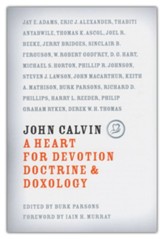 Ligonier Ministries / 2016 / Trade PaperbackOur Price$13.05
Retail Price$15.00Save 13% ($1.95)Availability: In StockStock No: WW697414
In celebration of the five hundredth anniversary of John Calvin’s birth (2009), Burk Parsons, editor of Tabletalk magazine and associate minister at St. Andrew’s in Sanford, Fla., has brought together an impressive group of pastors and scholars to reconsider Calvin’s life and legacy. Contributors include Jay Adams, Eric Alexander, Thabiti Anyabwile, Joel Beeke, Jerry Bridges, Sinclair Ferguson, Robert Godfrey, D. G. Hart, Michael Horton, Phillip R. Johnson, Steven Lawson, John MacArthur, Keith Mathison, Richard Phillips, Harry Reeder, Philip Graham Ryken, Derek Thomas, Thomas Ascol, and others.
In twenty succinct chapters, these men examine Calvin the man; his work (as a Reformer, a churchman, a preacher, a counselor, and a writer); and his teachings (on subjects as diverse as the Holy Spirit and prayer). What emerges is a multifaceted portrait of a man whose contributions to Christian thought and Christian living were significant indeed, a man whose life, work, and teachings are worthy to be remembered and studied even in the twenty-first century.
-
 Wipf & Stock / 2016 / HardcoverOur Price$42.53
Retail Price$55.00Save 23% ($12.47)Availability: In StockStock No: WW239644

The three years that Calvin spent in Strasbourg are often considered a simple gap between his two periods in Geneva (1536-1538 and 1541-1564). However, this period has been shown to be extremely fertile for Calvin in literary, theological, and pastoral fields, not forgetting his marriage to Idelette de Bure. It was in Strasbourg that Calvin published the second Latin edition, greatly increased, of his ""Institution,"" and where he wrote the first French version of this summary of the reformed religion. There he lectured on ""Romans,"" replied to Cardinal Sadolet, and wrote his ""Little Treatise on Holy Communion,"" intended to reconcile Protestants. There he became familiar with Martin Bucer's catechetical practice and with the songs of the Strasbourg parishes, which inspired his ""Some Psalms and Canticles put into Song,"" and there he gained the friendship of Philippe Melanchthon and the respect of other Reformers. 264 pages. H ardcover.
-
 Donald K. McKimCascade Books / 2015 / Trade PaperbackOur Price$17.79
Retail Price$23.00Save 23% ($5.21)Availability: In StockStock No: WW647600

This unique book is an introductory guide to the life and theology of John Calvin (1509-64). Calvin's theology has been highly significant as a major expression of Protestant theology. Reformed churches throughout the world appropriate Calvin's theological understandings and find his work provides important insights into Scripture and communicates a vibrant Christian faith. The first part of this book describes events in Calvin's life that helped shape his major work, the Institutes of the Christian Religion. The second part follows the flow of the Institutes and provides a narrative exposition of this major work, with numerous quotations of Calvin's own words. This enables readers to hear Calvin's voice as his views are explained. This close reading of Calvin opens the door to further, more thorough Calvin studies. ""A superb primer on the life and thought of John Calvin by one of our finest Reformation scholars. Highly recommended "" --Timothy George Founding Dean of Beeson Divinity School of Samford University, General Editor of the Reformation Commentary on Scripture ""McKim's accessible and lucid presentation of Calvin's life as well as his thought through a summary of the Institutes of the Christian Religion prioritizes the voice of Calvin in a fresh way that provides a solid and useful introduction for any reader."" --Jennifer Powell McNutt, Associate Professor of Theology and History of Christianity, Degree Coordinator of M.A. History of Christianity Program, Chair of Graduate Council, Wheaton College Graduate School ""John Calvin's ideals for theological writing were clarity and brevity. Don McKim's work would have made him proud. In fewer than two hundred pages, McKim gives a rich but accessible biography of Calvin, and an equally inviting summary journey through Calvin's mature theology as found in the 1559 Institutes. It makes a good first exploration of the influential Reformed theologian as well as a ready reference guide."" --Gary Neal Hansen, Associate Professor of Church History, University of Dubuque Theological Seminary Donald K. McKim is a former seminary Dean, Professor of Theology, and Executive Editor for Theology for Westminster John Knox Press. He is the author and editor of a number of books, many focusing on John Calvin and the Reformed theological tradition. He is an Honorably Retired minister in the Presbyterian Church (U.S.A.).
-
 Joyce McPhersonGreenleaf Press / Trade PaperbackOur Price$10.01
Retail Price$12.95Save 23% ($2.94)Availability: In StockStock No: WW514548

Written specifically for younger children, this biography focuses on Calvin's youth, his time at the university, and the circumstances of his conversation. Learn about his early leadership of the Protestants in France, and his flight to Basel, Strassburg, and Geneva when King Francis I began executing Protestants. A warm and affectionate picture of the leader of the second generation of the Protestant Reformation, this book is perfect for independent reading or reading aloud. 159 pages, softcover. Ages 9-12.
-
 T.H.L. ParkerWestminster John Knox Press / 2007 / Trade PaperbackOur Price$24.755.0 out of 5 stars for John Calvin: A Biography. View reviews of this product. 2 Reviews
Retail Price$32.00Save 23% ($7.25)Availability: In StockStock No: WW231811

John Calvin was one of the most important leaders of the sixteenth-century Protestant Reformation. In this revision of his major biography, T. H. L. Parker explores Calvin's achievement against the backdrop of the turbulent times in which he lived. With clear and concise explanations of Calvin's theology, analyses of his major works, and insights into his preaching, this definitive biography brings this crucially important reformer and his world to life for readers.
-
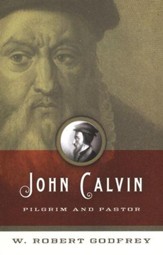 W. Robert GodfreyCrossway / 2009 / Trade PaperbackOur Price$14.245.0 out of 5 stars for John Calvin: Pilgrim and Pastor. View reviews of this product. 1 Reviews
Retail Price$18.99Save 25% ($4.75)Availability: Expected to ship on or about 11/14/26.Stock No: WW501326
One of western civilization's most influential men, Calvin considered himself a pilgrim and pastor first. This book introduces his essential life and thought to modern readers.
-
 Herman J. SelderhuisIVP Academic / 2009 / Trade PaperbackOur Price$29.374.0 out of 5 stars for John Calvin: A Pilgrim's Life. View reviews of this product. 2 Reviews
Retail Price$37.99Save 23% ($8.62)Availability: In StockStock No: WW829217

There are many biographies of John Calvin, the theologian--some villifying him and others extolling his virtues--but few that reveal John Calvin, the man.Professor and renowned Reformation historian Herman Selderhuis has written this book to bringCalvin near to the reader, showing him as a man who had an impressive impact on the development of the Western world, but who was first of all a believer struggling with God and with the way God governed both the world and his own life.Selderhuis draws on Calvin's own publications and commentary on the biblical figures with whom he strongly identified to describe his theology in the context of his personal development. Throughout we see a person who found himself alone at many of the decisive moments of his life--a fact that echoed through Calvin's subsequent sermons and commentaries. Selderhuis's unique and compelling look at John Calvin, with all of his merits and foibles, ultimately discloses a man who could not find himself at home inthe world in which he lived.
-
 Cambridge Bibles / Trade PaperbackOur Price$71.19Availability: In StockStock No: WW1672X

An international array of major Calvin scholars considers aspects of Calvin's theological thought and influence. Historians as well as theologians present the major themes in his writings in addition to discussing the ways in which his thought spread and has increasing importance today.
-
 William JohnsonWestminster John Knox Press / 2009 / Trade PaperbackOur Price$14.693.2 out of 5 stars for John Calvin: Reformer for the 21st Century. View reviews of this product. 4 Reviews
Retail Price$19.00Save 23% ($4.31)Availability: In StockStock No: WW234089

Many would argue that a true understanding of contemporary Christian thought is impossible without a basic understanding of Calvin's contributions. William Stacy Johnson, a leading Presbyterian theologian, offers this clear and fundamental study of Calvin's insights as a primer for those with little or no knowledge of his work.
This volume, enhanced with questions for discussion and a handy glossary, is sure to be an invaluable resource for those who seek an accessible way into a deeper understanding of Calvin's impact on the development of Christian faith and on society.
-
 Matthew Myer BoultonWm. B. Eerdmans Publishing Co. / 2011 / Trade PaperbackOur Price$25.51
Retail Price$32.99Save 23% ($7.48)Availability: In StockStock No: WW865649

For many today, John Calvin is best known as an austere, strictly intellectual teacher of Protestant doctrine. But Matthew Myer Boulton reads him very differently, arguing that for Calvin, Christian theology is properly conceived and articulated primarily for the sake of everyday, practical formation through the church's treasury of spiritual disciplines.
Although Calvin famously opposed the cloister, Boulton shows that his purpose was not the eradication but rather the democratization of spiritual disciplines often associated with monasticism. Ordinary disciples, too, Calvin insisted, should embrace such formative practices as close scriptural study, daily prayer and worship, regular Psalm singing, and frequent celebration of the Lord's Supper. This deeply formational approach to Christian doctrine provides a fruitful template for Protestant theology today -- and tomorrow.
-
 Charles ParteeWestminster John Knox Press / 2010 / Trade PaperbackOur Price$42.53
Retail Price$55.00Save 23% ($12.47)Availability: In StockStock No: WW238070

Jmx0O1AmZ3Q7PHNwYW4gc3R5bGU9ImZvbnQtZmFtaWx5OiAmcXVvdDtPcGVuIFNhbnMmcXVvdDssIEhlbHZldGljYSwgQXJpYWwsIHNhbnMtc2VyaWY7Ij5UaGUgdGhlb2xvZ3kgb2YgSm9obiBDYWx2aW4gKDE1MDktMTU2NCkgd2FzIGdpdmVuIGNsYXNzaWMgZXhwcmVzc2lvbiBpbiBoaXMgSW5zdGl0dXRlcyBvZiB0aGUgQ2hyaXN0aWFuIFJlbGlnaW9uICgxNTU5KS4gSW4gdGhpcyBkZWZpbml0aXZlIHdvcmssIGxvbmd0aW1lIENhbHZpbiBleHBlcnQgQ2hhcmxlcyBQYXJ0ZWUgb2ZmZXJzIGEgY2FyZWZ1bCBleHBvc2l0aW9uIG9mIENhbHZpbnMgdGhlb2xvZ3kgYXMgaXQgYXBwZWFycyBpbiB0aGUgSW5zdGl0dXRlcywgcGF5aW5nIHNwZWNpYWwgYXR0ZW50aW9uIHRvIHRoZSByZWxhdGlvbiBvZiBDYWx2aW5zIHRoZW9sb2d5IHRvIHRoZSBoaXN0b3J5IG9mIENocmlzdGlhbiB0aG91Z2h0IGFuZCB0byB0aGUgcXVlc3Rpb25zIG9mIENhbHZpbnMgb3duIHRpbWUuIFBhcnRlZSBhbHNvIGV4YW1pbmVzIHRoZSBkZXZlbG9wbWVudCBvZiBsYXRlciBDYWx2aW5pc20gYW5kIHRoZSBhZGFwdGF0aW9ucyBvZiBDYWx2aW5zIHRob3VnaHQgYnkgaGlzIGxhdGVyIGZvbGxvd2Vycy4gQXMgUGFydGVlIHNob3dzLCBDYWx2aW5zIHRoZW9sb2d5IHByb3ZpZGVzIGEgcHJvZm91bmQgZXhwb3NpdGlvbiBvZiBDaHJpc3RpYW4gZmFpdGggYW5kIGEgbWFnbmlmaWNlbnQgcmVzb3VyY2UgZm9yIHRoZW9sb2d5IHRvZGF5Ljwvc3Bhbj4=
-
 Richard Stauffer, Shiver GeorgeSolid Ground Christian Books / Trade PaperbackOur Price$13.50
Retail Price$15.00Save 10% ($1.50)Availability: In StockStock No: WW251554

Through the nearly 450 years since his death, John Calvin has been portrayed by his critics - Protestant as well as Catholic - as a cold, ruthless fanatic. This distorted characterization, for the most part, remains today. What was this man really like? An unfeeling, gloomy monster or a saint untouched by the common problems which beset lesser men? The author examines Calvin's personal correspondence and reveals him as a man capable of human mistakes and weaknesses, and yet, a deeply dedicated, sensitive individual undeserving of the years of vilification. This book, available here in English, for the first time in over 35 years, considers John Calvin from a personal standpoint. The excellent preface by Calvin-scholar John T. McNeill, carefully noted resources, brevity, readability, and human interest make this a biography for scholars and laymen alike.
-
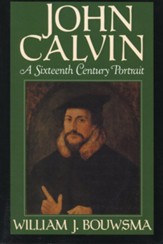 William BouwsmaOxford University Press / 1988 / Trade PaperbackOur Price$59.991.0 out of 5 stars for John Calvin: A Sixteenth-Century Portrait. View reviews of this product. 1 ReviewsAvailability: In StockStock No: WW59514
Historians have credited--or blamed--Calvinism for many developments in the modern world, including capitalism, modern science, secularization, democracy, individualism, and unitarianism. These same historians, however, have largely ignored John Calvin the man. When people consider him at all, they tend to view him as little more than the joyless tyrant of Geneva who created an abstract theology as forbidding as himself. This volume, written by the eminent historian William J. Bouwsma, who has devoted his career to exploring the larger patterns of early modern European history, seeks to redress these common misconceptions of Calvin by placing him back in the proper historical context of his time. Eloquently depicting Calvin's life as a French exile, a humanist in the tradition of Erasmus, and a man unusually sensitive to the complexities and contradictions of later Renaissance culture, Bouwsma reveals a surprisingly human, plausible, ecumenical, and often sympathetic Calvin. John Calvin offers a brilliant reassessment not only of Calvin but also of the Reformation and its relationship to the movements of the Renaissance.
-
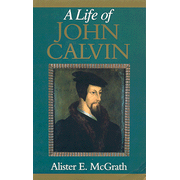 Alister E. McGrathWiley-Blackwell / 1993 / Trade PaperbackOur Price$89.27Availability: In StockStock No: WW189475
The first biography of John Calvin since 1975 and the only life of the great reformer to analyse his impact on subsequent generations of theologians, politicians, economists and philosophers. This biography is theologically unbiased and is written as much for historians and general readers as for those interested in Calvin the Church reformer.
-
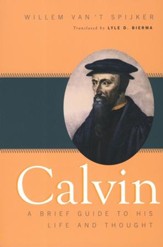 Willem Van't SpijkerWestminster John Knox Press / 2009 / Trade PaperbackOur Price$29.39
Retail Price$38.00Save 23% ($8.61)Availability: In StockStock No: WW4232252
John Calvin (1509-1564) was one of the main Protestant Reformers of the sixteenth century. His thought spread worldwide, and today he is still looked to for theological insights and as a guide to Christian faith by millions of people. In this book, one of the world's leading Calvin scholars, Willem van 't Spijker, provides a compact guide to Calvin's life and the main elements of his thought. Van 't Spijker bases this work on the best contemporary scholarship. By tracing Calvin's influence, he shows both the development of Calvin's thought and the ways in which it was important in his time and later. This book will be an excellent introduction to Calvin's life and thought for both beginning students and those already acquainted with Calvin's work.
-
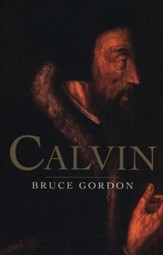 Bruce GordonYale University Press / 2011 / Trade PaperbackOur Price$25.003.0 out of 5 stars for Calvin. View reviews of this product. 1 ReviewsAvailability: In StockStock No: WW170849
A revealing new portrait of John Calvin that captures his human complexity and the sixteenth-century world in which he fought his personal and theological battles
During the glory days of the French Renaissance, young John Calvin (1509-1564) experienced a profound conversion to the faith of the Reformation. For the rest of his days he lived out the implications of that transformation—as exile, inspired reformer, and ultimately the dominant figure of the Protestant Reformation. Calvin’s vision of the Christian religion has inspired many volumes of analysis, but this engaging biography examines a remarkable life. Bruce Gordon presents Calvin as a human being, a man at once brilliant, arrogant, charismatic, unforgiving, generous, and shrewd.
The book explores with particular insight Calvin’s self-conscious view of himself as prophet and apostle for his age and his struggle to tame a sense of his own superiority, perceived by others as arrogance. Gordon looks at Calvin’s character, his maturing vision of God and humanity, his personal tragedies and failures, his extensive relationships with others, and the context within which he wrote and taught. What emerges is a man who devoted himself to the Church, inspiring and transforming the lives of others, especially those who suffered persecution for their religious beliefs.
-
 T.H.L. ParkerBloomsbury Academic / 2002 / Trade PaperbackOur Price$50.60Availability: In StockStock No: WW63699

John Calvin (1509-64) influence reaches from the Reformation to Karl Barth and beyond. Outstanding as biblical scholar, preacher and practical Church reformer, Calvin intended all his work to serve the Word of God. Although couched in 16th century terms, his theology drew on the wealth of previous Christian thought and continues to be relevant to the situation of the Church today.This book is a comprehensive introduction to the whole range of Calvin's theology. Concentrating on Calvin's major work The Institutes of the Christian Religion, Parker explains it's relevance to Christians of all times. This volume will give readers a full and serious sense of Calvin both as a Christian and as a thinker.
-
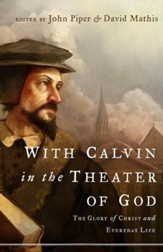 Marvin Olasky, Sam Storms, Douglas Wilson, Mark TalbotCrossway / 2010 / Trade PaperbackOur Price$18.005.0 out of 5 stars for With Calvin in the Theater of God. View reviews of this product. 1 Reviews
Retail Price$20.00Save 10% ($2.00)Availability: In StockStock No: WW514121
Stemming from the Desiring God 2009 National Conference, Julius Kim, Douglas Wilson, Marvin Olasky, Mark Talbot, Sam Storms, and John Piper invite us to sit with Calvin in the theater of God, marveling at his glory.
-
 Christopher ElwoodWestminster John Knox Press / 2017 / Trade PaperbackOur Price$17.01
Retail Price$22.00Save 23% ($4.99)Availability: In StockStock No: WW262243

Honoring the 500th anniversary of the Reformation, Christopher Elwood offers an insightful and accessible overview of John Calvin's theological ideas within their historical context. A Brief Introduction to John Calvin discusses the trials and tribulations Calvin encountered as he ministered and taught in Geneva, paying special attention to the theological controversies associated with the Trinity and predestination. In this concise introduction, Elwood explores the development of Calvinism and its influence in today's world.
-
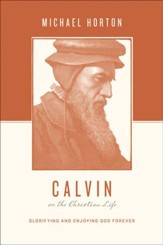 Michael HortonCrossway / 2014 / Trade PaperbackOur Price$21.975.0 out of 5 stars for Calvin on the Christian Life: Glorifying and Enjoying God Forever. View reviews of this product. 1 ReviewsAvailability: In StockStock No: WW539565
Drawing heavily on Calvin’s letters, commentaries, the Institutes, and other lesser-known writings, Horton explores the riches of Calvin’s piety and its significance for contemporary Christian living.
Works by John Calvin
-
 John CalvinBanner Of Truth / 2020 / HardcoverOur Price$20.11
Retail Price$26.00Save 23% ($5.89) -
 John CalvinWipf & Stock / 2019 / Trade PaperbackOur Price$30.16
Retail Price$39.00Save 23% ($8.84) -
 John CalvinWipf & Stock / 2019 / Trade PaperbackOur Price$25.52
Retail Price$33.00Save 23% ($7.48) -
 John CalvinWipf & Stock / 2019 / HardcoverOur Price$40.99
Retail Price$53.00Save 23% ($12.01)